Published by Jeremy. Last Updated on April 17, 2026.
Disclaimers: Our site uses demographic data, email opt-ins, display advertising, and affiliate links. Please check out our Terms and Conditions for more information. Listed prices and attraction details may have changed since our visit and initial publication.
When visiting Madeira, you’ll do well to rent a car. This island is small enough that you can explore with ease, but large enough that having your own set of wheels is necessary.
As with most guides, we’re here to warn you, however, that the roads on Madeira can be quite steep (we’re not kidding). But we were pleasantly surprised by how easy it was to drive around, and wanted to share some tips and advice for driving in Madeira we had after our visit!
The Road Conditions Are Mostly Good – Just Steep
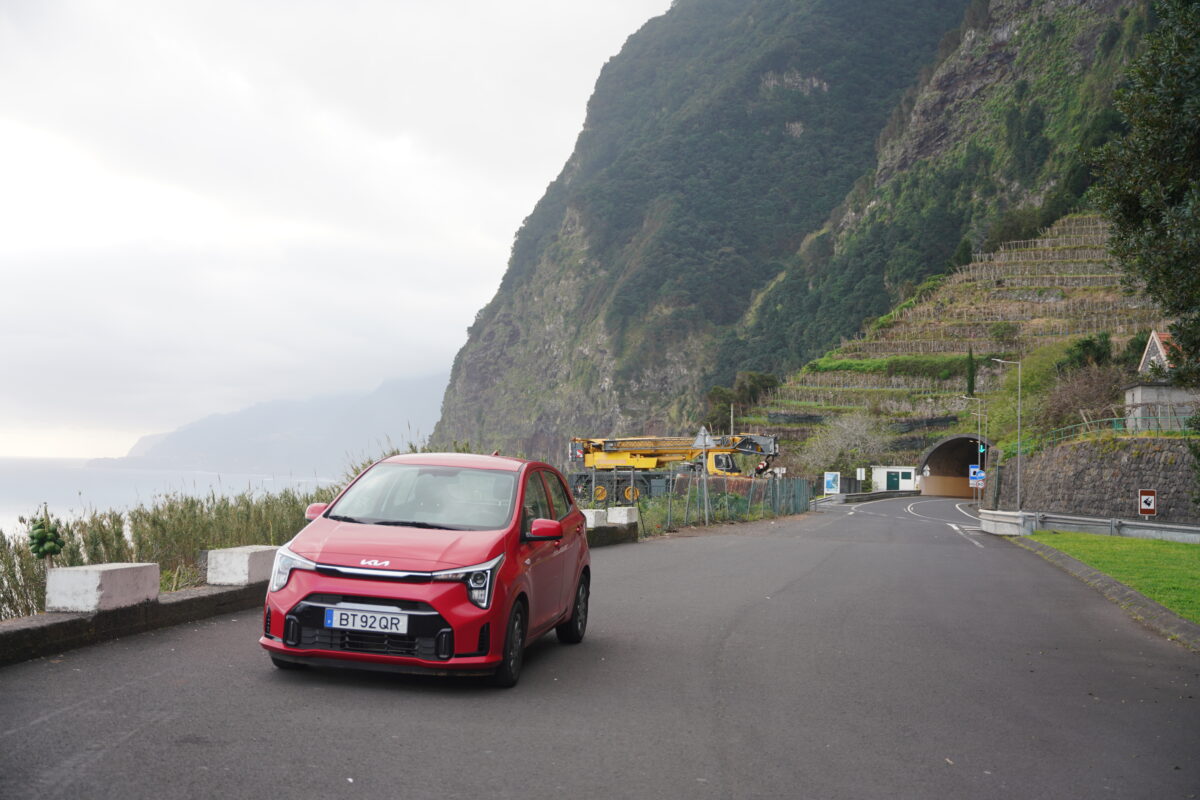
The first question we always have when driving on a remote island is whether the road conditions are poor, as we’ve had our share of interesting driving scenarios on islands around the world.
Thankfully, we have good news– Madeira has really, really good roads in the vast majority of places. Most roads are paved nearly everywhere, and even places where you may have to stop to let oncoming traffic pass (such as not being quite wide enough for two cars to go both ways) are rather easy. Just look for a pull-off every few hundred meters, move out of the way, let the car pass, and off you go.
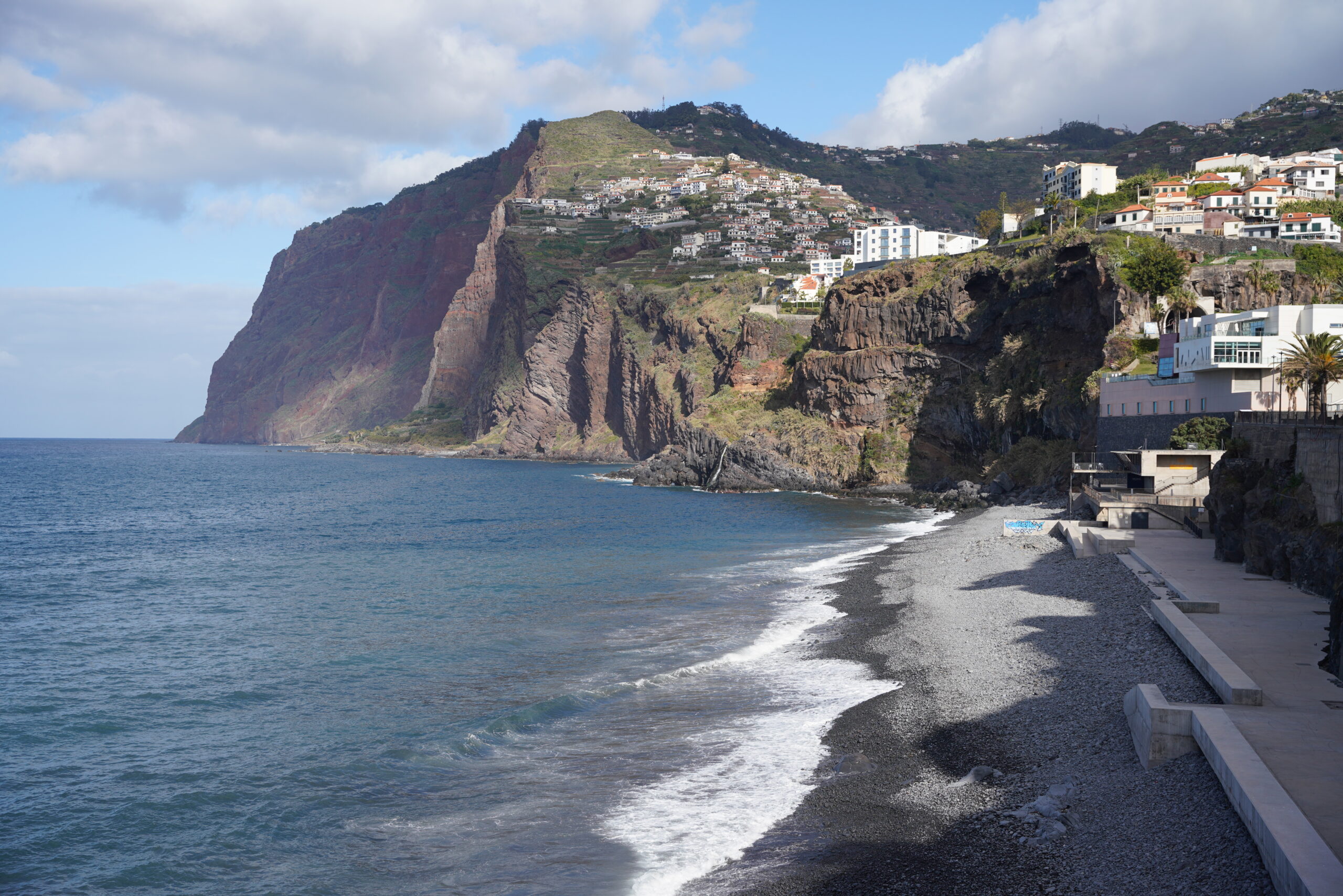
But we also have some bad news– the roads can also be very, very steep. The highways have hills. The tunnels can be on a slope. Roads can be windy, twisty, and go up, up, up, and when you just think you are at the top, continue to rise even further. I wouldn’t say this is necessarily bad, but if you’re not familiar with steep island driving, you’ll definitely have some moments where this can feel quite daunting.
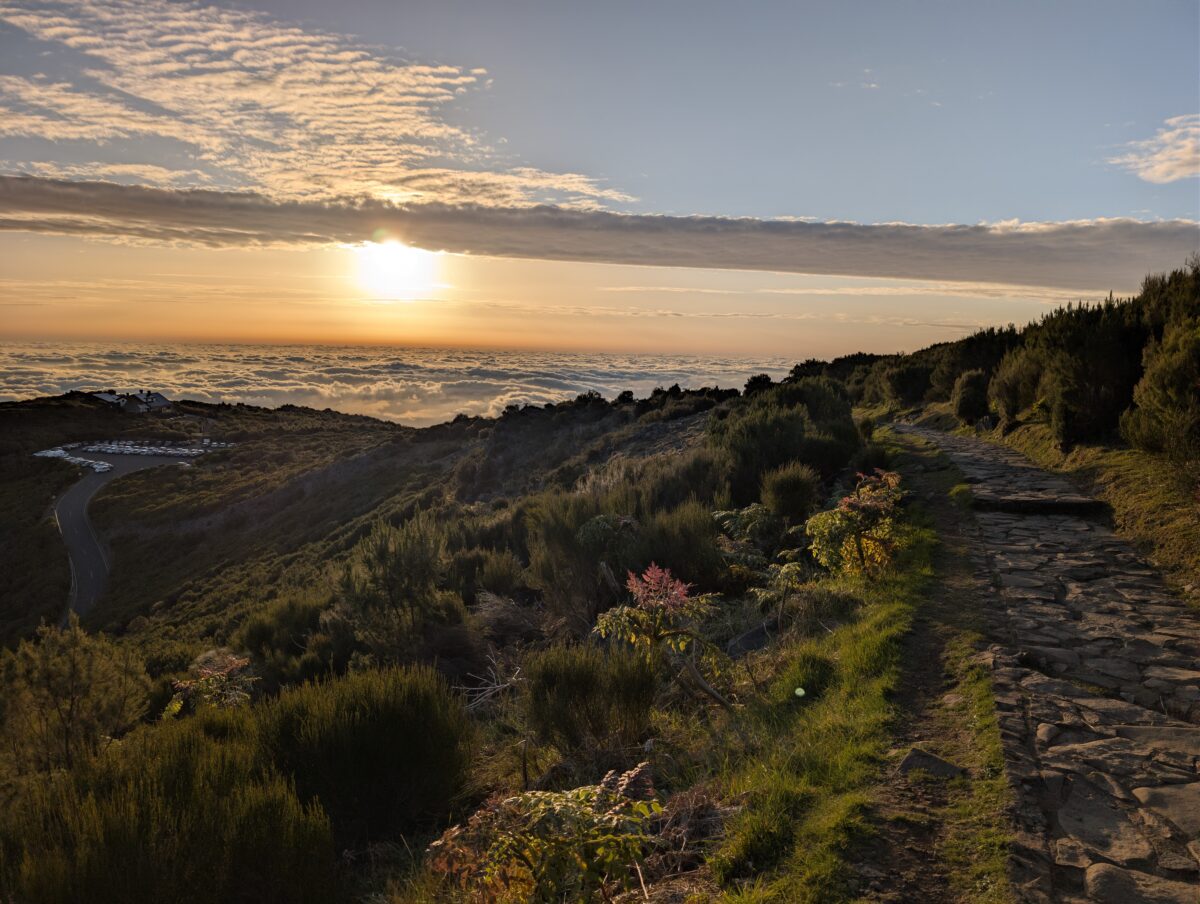
Ignoring that, some back roads have less desirable conditions, such as uneven pavement or being so narrow that two lanes of cars have to squeeze into one, with intermittent pull-off spots. We had several instances on these where we’d be driving up a steep hill, a car would be coming down, they would not reverse back to their pull-off spot, and we had to back down the hill quite a ways to get to a safe place to pull over.
I can’t say that you can always avoid these, because if you’re going on remote hikes, you absolutely will experience them. But if you are driving a general loop around the island, for example, you will have a better driving experience if you stick to the primary roads as much as possible, except for detours to your final destination. A-to-B shortcuts can definitely get you on some narrow roads like these!
Small Cars May Struggle
One tip you’re likely going to see again and again when it comes to driving in Madeira is that small cars struggle here thanks to the island’s steep hills.
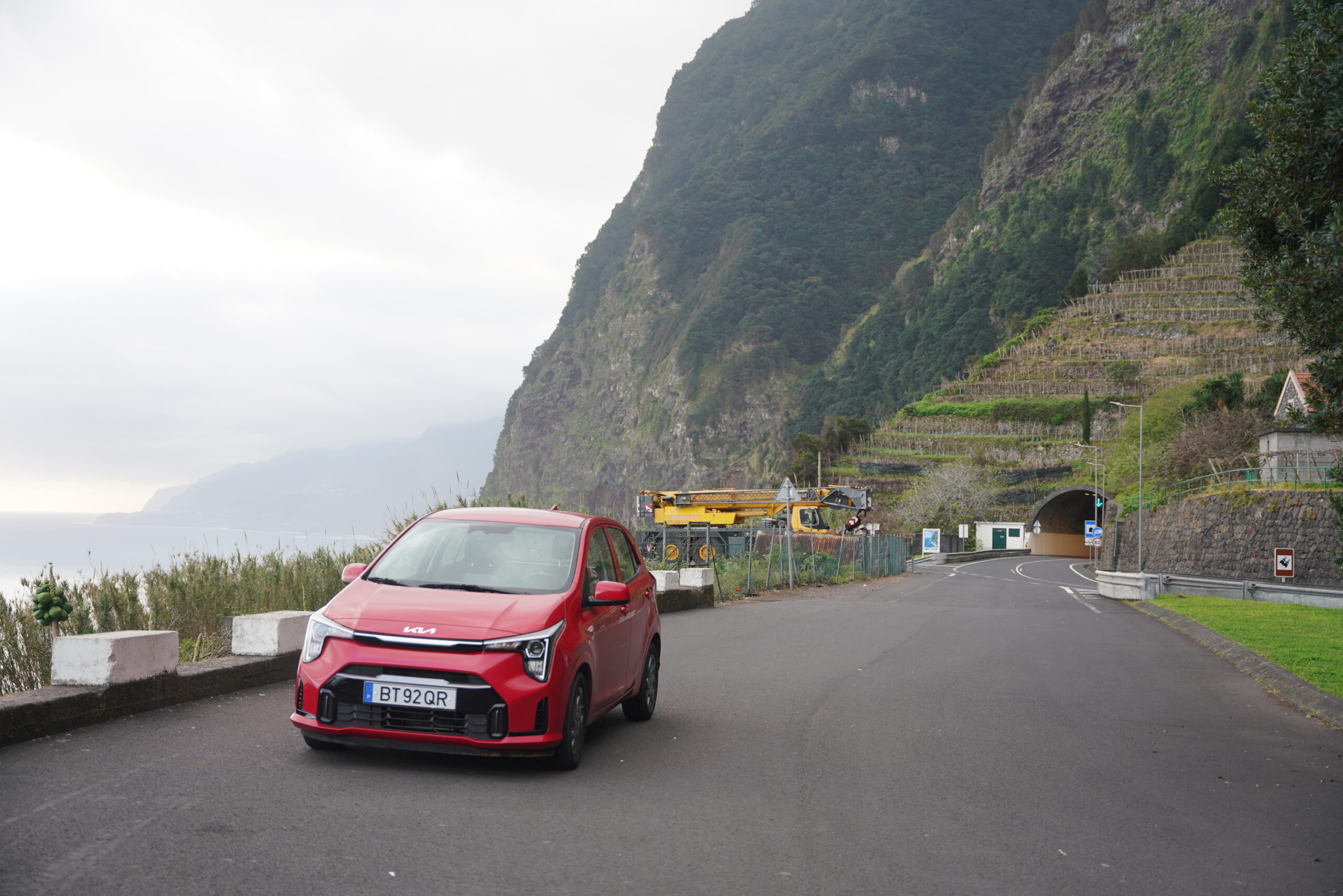
This is all true, and our baby Kia Picanto definitely had times when it struggled to get up to speed despite my foot fully down on the pedal. We made it work with this tiny car, we will admit, but we can see how spending more on a car with a slightly stronger engine could make your driving experience a little easier on the island. At times, we wish we would’ve splurged for an SUV, if we are honest.
One thing we did not see discussed as much, on the other hand, is parking your car.
In our experience, our Kia Picanto did not have a dedicated park slot on the shifter. It was one of those vehicles where you had to pop the car into neutral and then pull the emergency parking brake to fully park before turning the car off.
We made it to our first hike, stopped a nominal hill, shifted into neutral, pulled the parking brake and… the car started rolling down the hill slightly.
Now, we later found out that my inexperience with this parking format came into play, as the hand brake had two lock settings for parking (pulling up even harder engaged an even more sturdy brake lock). But at the time, I didn’t realize that, and it caught me by surprise.
After talking to locals on the island, it sounded like smaller cars like this one typically struggle in precisely this scenario, as the hand brake can wear down over time. This is yet another reason upgrading to a slightly better car class could help- you’re going to see a lot of hills you may want to park on!
I certainly was second-guessing parking after that first experience!
Pay Attention While on the Highways
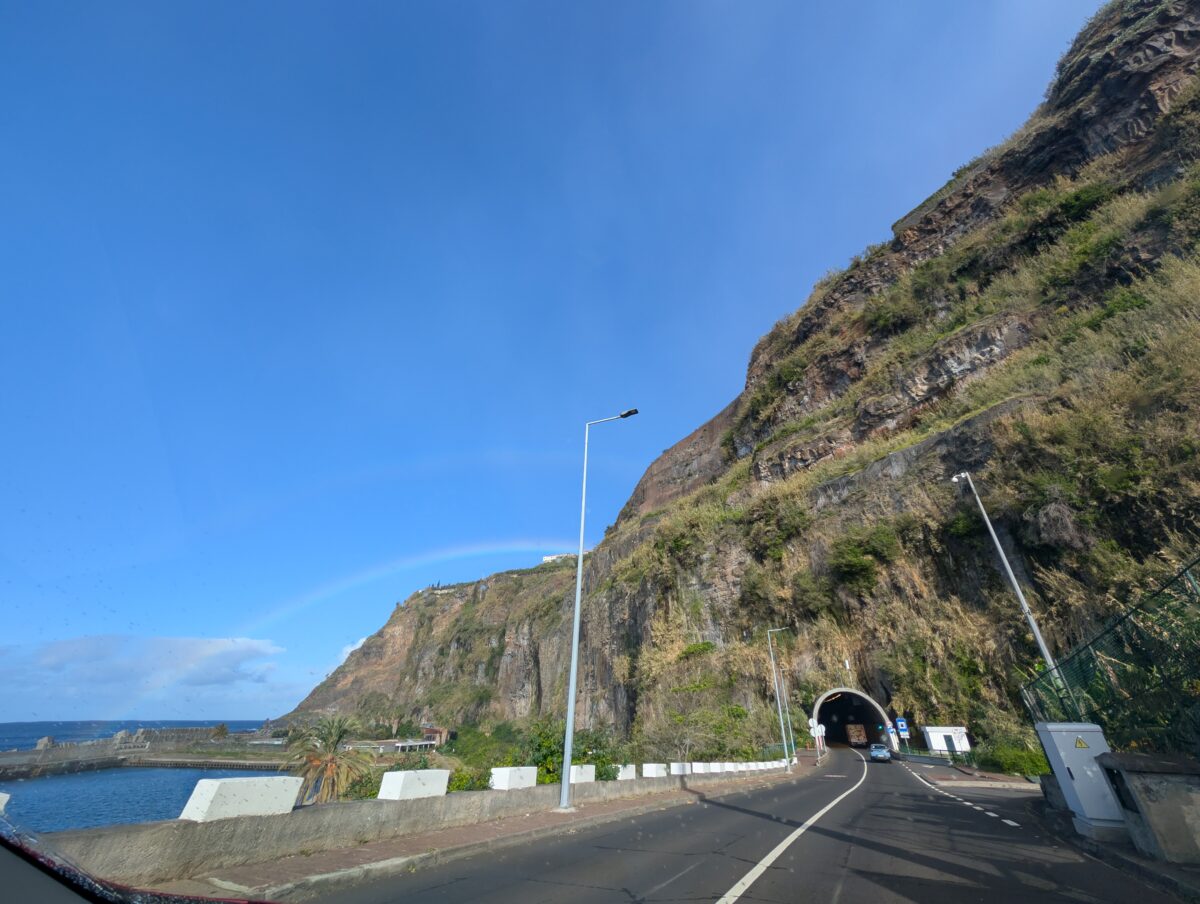
One particular concern that feels somewhat unique to Madeira is actually driving on the major highways, especially around Funchal.
It may be counterintuitive, as highways are often the easiest roads to drive on, but I found driving on the highways around the city to be almost as frustrating as some of the narrow backroads- albeit for a different reason.
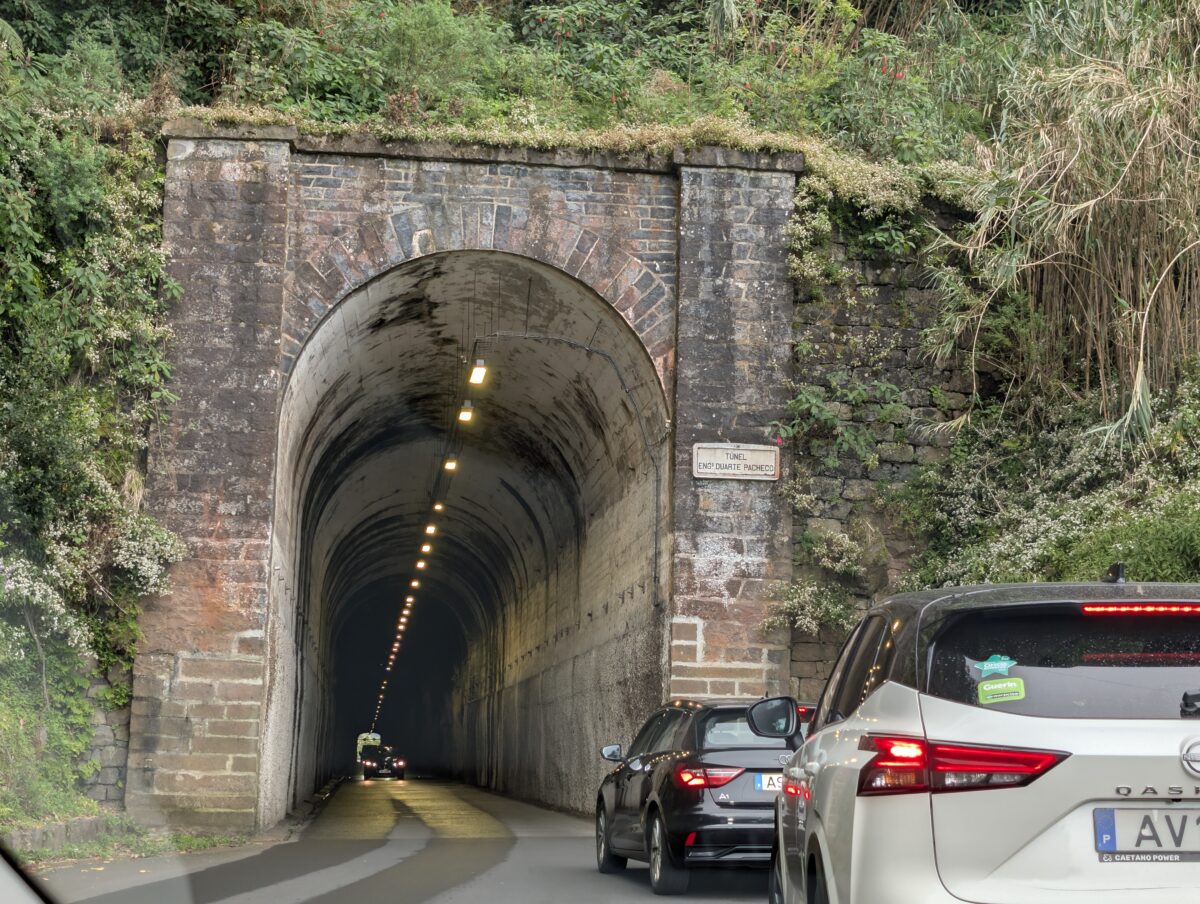
This one goes back to Madeira’s hills. Much like backroads, you’re going to be going up and over hills when on highways (albeit not at the insane grades of some backroads) and will have frequent blind spots, short on-ramps and off-ramps, roundabouts appearing immediately after a tunnel, and more. One minute you’ll be driving along at speed, come on a turn or a hill, and all of a sudden, traffic may be at a standstill, and you have a short distance to stop!
On-ramps and off-ramps have similar issues because they appear rather quickly, don’t have much room for merging, and often have tight turns immediately, making for rapid speed changes that often aren’t what I’d argue are appropriate for highway speeds.
In my experience, the farther you get from Funchal, the less these become issues, but suffice it to say you really need to pay attention even on a highway. Driving conditions can and do change rapidly, so be sure to keep a safe distance from cars ahead of you.
Make Sure You Have Good Insurance
Given all of this, you shouldn’t be surprised to hear that car damage in Madeira is common. You will be hard-pressed to find cars on the island that don’t have scratches, bumps, dings, and other minor damage, as that is just how life is on an island like this one (especially an island with many tourists who are not used to local conditions).
Our rental car was no different and could be best described as well-loved. Not damaged, but definitely had seen its fair share of scratches that were noted at length in our check-out documentation.
One thing we noticed with car rental companies in Madeira is that many had reviews that charged sufficient fees to drivers who caused damage to their cars. As such, this is one of those destinations where you will want to make sure you’re prepared for possible damage and have good insurance ready to go just in case.
Some rental companies offer supplemental insurance, either with a partial deductible or full coverage, but if you book with a credit card that has rental car coverage, they often require you to decline these if you want your credit card coverage to apply. (Some also act as primary or secondary coverage relative to your personal auto insurance, too.)
We cannot say what the best insurance type would be for your personal situation, but we would make sure you do not book a car with a high deductible for damage, and that you have some form of supplemental insurance that works best for you.
You really don’t want to be damaging your car here.
Overall, despite the hills, I actually quite enjoyed driving in Madeira and found the road conditions to be surprisingly good. Just be prepared for some rather steep hills, give yourself sufficient distance away from other cars, watch out for blind spots, and you’ll be good to go!
Do you have any tips for driving in Madeira? Comment below to share!
✈️ Book Your Next Trip
- • Planning a trip? Find a flight deal.
- • In need of a room? Check out hotel and Airbnb prices.
- • Taking a cruise? Find a cruise itinerary for your journey.
- • Book a rental car or day tours to explore more as well!
- • Don't overlook travel insurance to protect your trip, too!

Book a Tour in Madeira
Read More from the Madeira
Read More from Europe
About Jeremy
About the Author: Jeremy is a full-time travel writer based in Pittsburgh and primary author of this site. He has been to 80+ countries on five continents and seeks out new food, adventure activities, and off-the-beaten-path experiences wherever he travels.