
Published by Jeremy. Last Updated on May 11, 2026.
Disclaimers: Our site uses demographic data, email opt-ins, display advertising, and affiliate links. Please check out our Terms and Conditions for more information. Listed prices and attraction details may have changed since our visit and initial publication. To see more of our content, set us as a Preferred Source in Google.
Every time we visit Paris, we always make a point of spending some time at the Louvre. It is one of the best museums in the world, and no matter how many times we visit, we always find something new, whether it is a piece of art, a floor we missed, or sometimes even an entire wing we overlooked.
But the Louvre is also somewhat infuriating.
As the most visited museum in the world (and also the largest!), with a capacity of up to 30,000 visitors per day, you can certainly feel it here- and not just at the Mona Lisa. From lines at the art to crowds in the galleries, and even lines to get in the door despite holding timed-entry tickets, saying the Louvre is very, very busy is an understatement.
By the end of every visit, you’re going to be tired of people just as much as being overloaded from seeing world-class art. The latter is a good thing. The former, not so much.
So in this one, we thought we’d share some thoughts to help get the most out of your visit to the Louvre despite some of the challenges!
📍 How to Do The Louvre Right – Top Tips
- Buy Tickets in Advance: The Louvre is the most visited museum in the world and timed-entry tickets regularly sell out- book your ticket early to get your preferred timeslot
- Enter at the Carrousel: The Pyramid entrance is the most popular and often has a long line for timed entry holders, but the Carrousel entrance around the corner typically has a far shorter wait
- Plan Your Must-Sees Ahead of Time: It is easy to get lost in the museum due to its sheer size, so having a plan of attack over what pieces and wings you want to see is critical
Looking to reserve an apartment in Paris? Click here to book.
Buy Tickets in Advance

Given how busy the Louvre is, you would do well to buy your tickets in advance. This may not be an absolute necessity compared to other museums in Paris, which sell out far sooner (they do have a massive capacity, after all), but we will make the recommendation all the same- especially in peak season.
Why? Everything about getting inside the Louvre is a chore. There are lines everywhere, even with timed entry tickets, and this is just one step that will make your life easier all around.
In a more practical sense, although you may likely find tickets available for the Louvre more last-minute, it feels like morning slots are the first to book up. So if you want to spend a great deal of time inside the museum, buying a ticket for an early slot in advance is your best chance to do so.
So save yourself the first headache and pick up a ticket well in advance.
Use the Carrousel Entrance to Skip the Line
Continuing the trend of the Louvre being busy, you may think that if you have a timed entry ticket, you’re going to be able to just walk right in. Unfortunately, even though many museums sell timed-entry tickets, they sell a lot of them, and you’ll still be waiting in line to get inside.
The Louvre is no different.
When we walked up to the Pyramid right before our timed entry slot, we saw a massive line of people to get in. We thought these were people looking to buy tickets, because surely there couldn’t be that many people with timed entry tickets for our window.
It was.
In fact, people were lining up for the next entry windows well ahead of that timeslot, too, simply to be the first ones inside.
I don’t have a good estimate of how long the line would’ve been if we’d waited at the Pyramid entrance, but we didn’t stick around to find out. Thankfully, a friend tipped us off to the Carrousel Entrance on Rue de Rivoli just a few steps away. This entrance often has no line, and you can walk straight into the shopping area at the Louvre, onward to security, and be in the museum after a quick security check.
We really shaved off a lot of time by not entering through the Pyramid, and we highly recommend using the side entrance to avoid the crowds.
Plan Your Visit in Advance
✈️ Book Your Next Trip
- • Planning a trip? Find a flight deal.
- • In need of a room? Check out hotel and Airbnb prices.
- • Taking a cruise? Find a cruise itinerary for your journey.
- • Book a rental car or day tours to explore more as well!
- • Don't overlook travel insurance to protect your trip, too!
Finally, we should reiterate that the Louvre is massive not just on the outside, but on the inside too. Between the different wings, numerous floors, a not-so-conventional layout, and even fewer signs, it is easy to get turned around in the building.
Despite having visited several times over the years and feeling like we have a really good handle on the floor plan, we found ourselves getting turned around again, and again, and again.
Signage at the Louvre is challenging because only the most famous works have directions available. Most rooms are also numbered somewhere in the space (some obvious, some more obscure), but this often doesn’t sync up to every single room on the maps you pick up when entering.
One issue we had on our last visit, for example, was that we couldn’t find out how to travel between wings. We thought there should be a path amongst the galleries, but we just couldn’t find it. After asking a docent for help, we were advised to go back out the main entrance and re-enter the museum there. (Yes, this meant passing through security again, and, yes, showing our ticket again.)
While this may have been special circumstances for our particular visit, with several rooms closed, it just shows that the layout of the Louvre is tricky. You’ll go up and down stairs, loop in circles, get turned around, go up and down more stairs, and then still somehow end up back where you started. This happened to us several times.

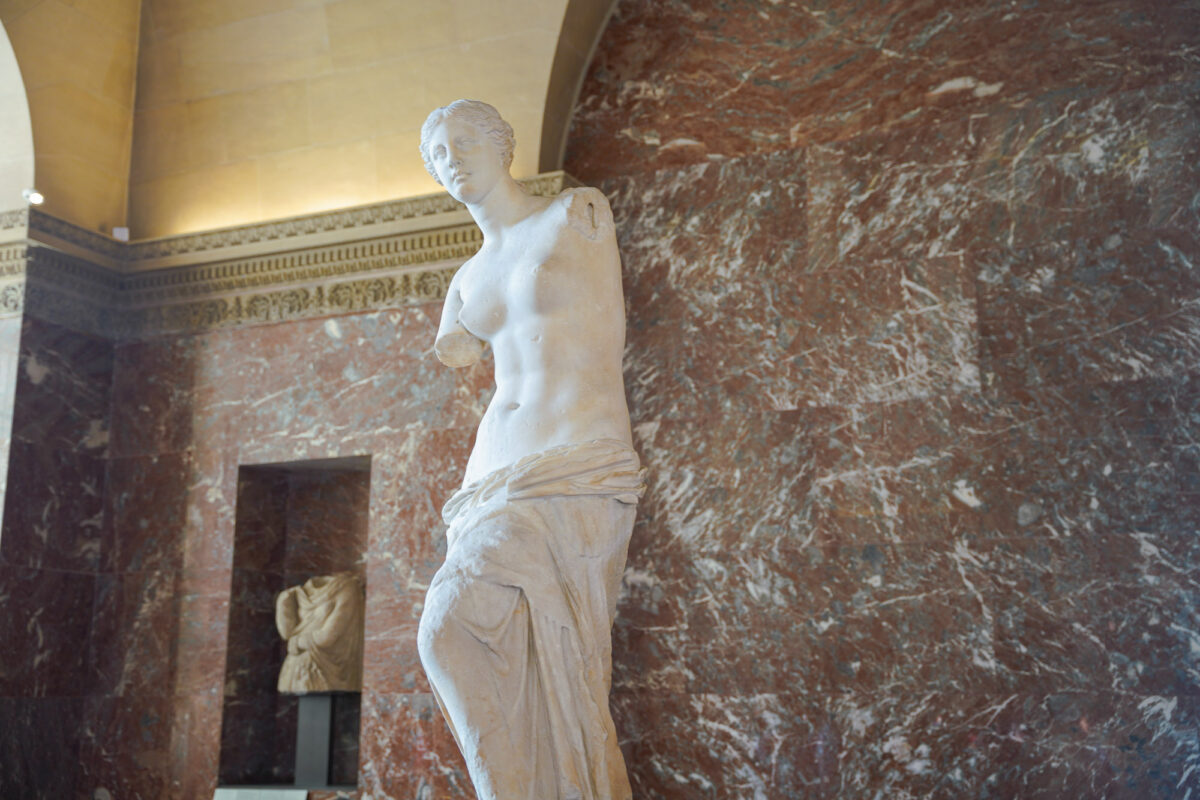
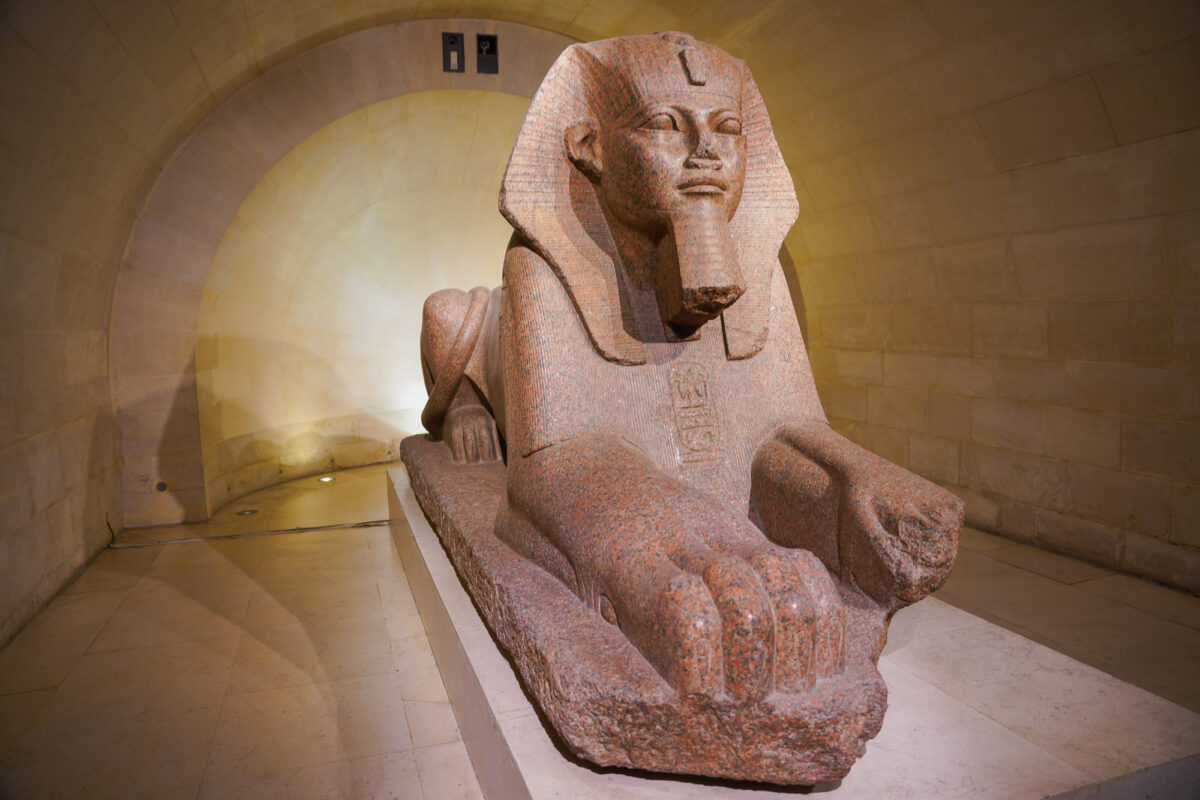
This is why making your plan of what to see in advance is so important. Yes, you can see the Mona Lisa, Winged Victory, the Venus de Milo, and others easily (there are signs for these). But if you want to thoroughly explore a certain wing (like the Egyptian wing), or cover ground in all wings of the museum, you really need to map that out in advance, or else you’ll risk missing something.
Are you really going to walk to the opposite side of the Louvre to hit that one room you missed after walking 5-10 miles and up and down countless staircases? If you’re like us, the answer is no, and that is why we always seem to be able to find something new at the Louvre in future visits- you are going to miss a lot no matter what.
Overall, despite some of the challenges of the Louvre, it remains one of my favorite museums in the world, and I will always be up for another visit whenever I get to Paris. It is just that good.
About Jeremy

About the Author: Jeremy is a full-time travel writer based in Pittsburgh and primary author of this site. He has been to 80+ countries on five continents and seeks out new food, adventure activities, and off-the-beaten-path experiences wherever he travels.